Our team at AEM Tool and Machining is here to help. Contact us today to discuss your needs or request a quote.

Turning Operations
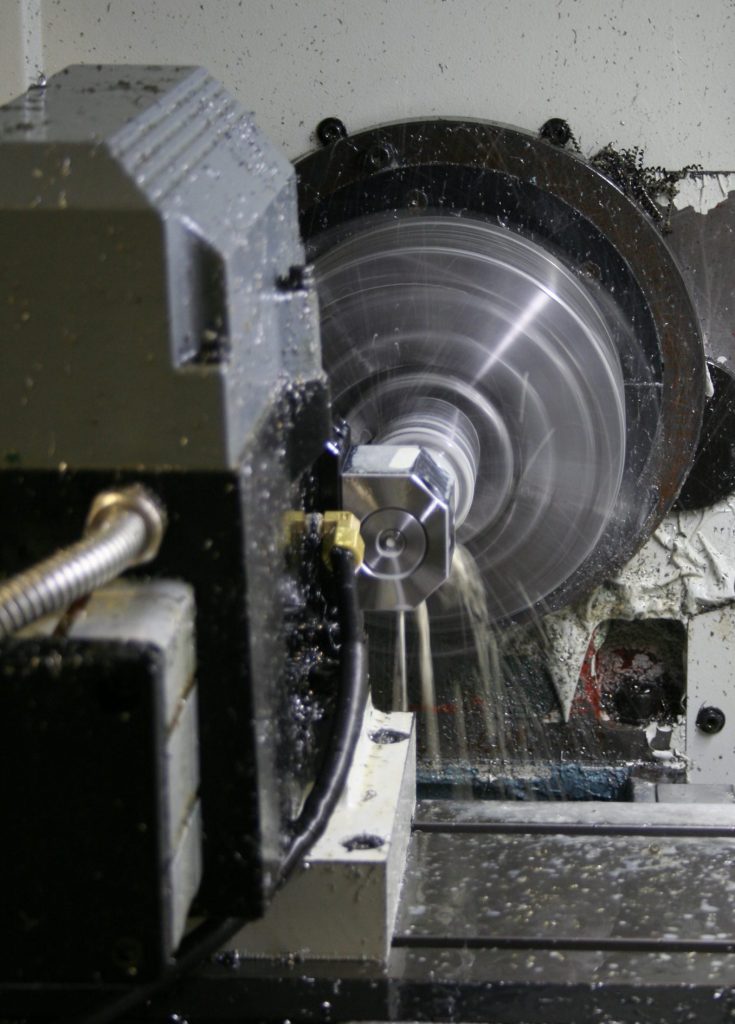
Lathe machining is a manufacturing process used to create parts with rotational symmetry. It’s one of the oldest and most versatile machining techniques, primarily used for shaping and finishing materials like metal, and plastic.
How Lathe Machining Works:
- Setup:
- Workpiece: The material to be machined is secured onto the lathe’s spindle, which rotates the workpiece.
- Tool: A cutting tool is mounted on a tool post or carriage and is positioned relative to the rotating workpiece.
- Rotation:
- The lathe rotates the workpiece around its axis. This rotation allows for precise and symmetrical cutting and shaping.
- Cutting:
- The cutting tool is brought into contact with the rotating workpiece. As the tool moves along the surface, it removes material to shape the part according to the desired dimensions and features.
- Common operations include turning (shaping the outer diameter), facing (cutting the end surface), drilling (creating holes), boring (shaping an inside diameter), grooving (on face and diameter) and threading (standard and metric to acme).
- Finishing:
- After the initial shaping, additional finishing operations such as sanding or polishing may be performed to achieve the final surface finish and accuracy.
Types of Lathes:
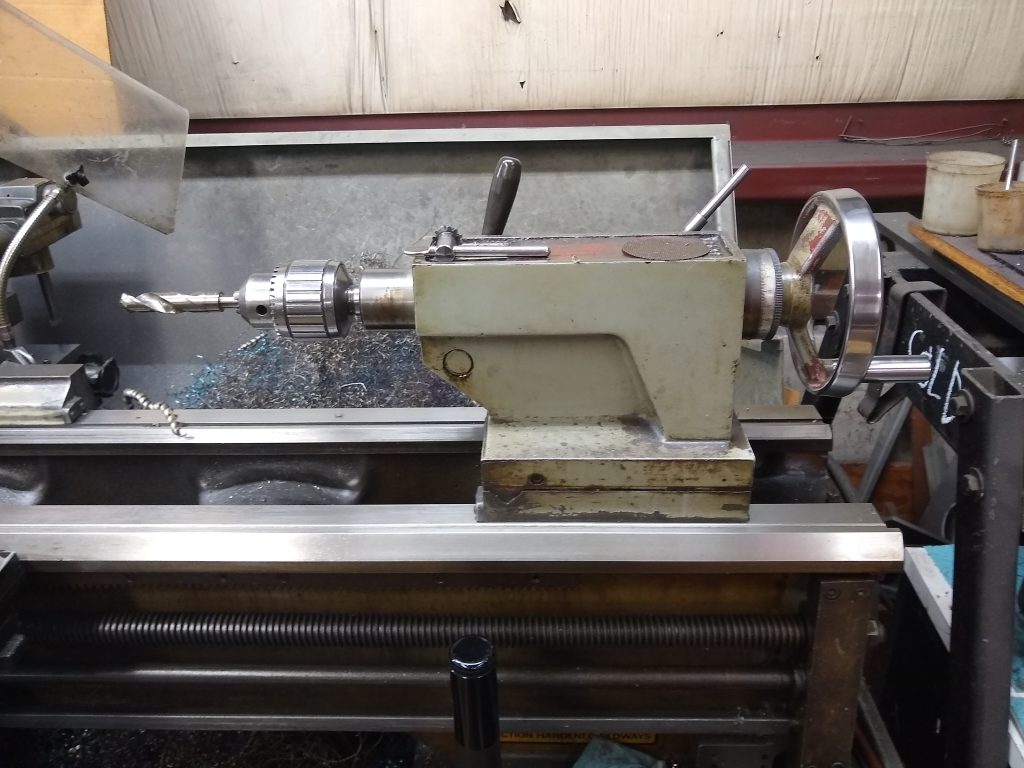
- Engine Lathe: The most common type, used for general-purpose machining. It has a range of speeds and feeds and can perform various operations.
- Turret Lathe: Equipped with a turret that holds multiple tools, allowing for faster and more complex operations without changing tools manually.
- CNC Lathe: A computer-controlled lathe that automates the machining process for high precision and repeatability. It’s ideal for complex and high-volume production runs.
Applications:
Lathe machining is used to produce a wide variety of parts, including:
- Cylindrical Parts: Shafts, rods, and tubes.
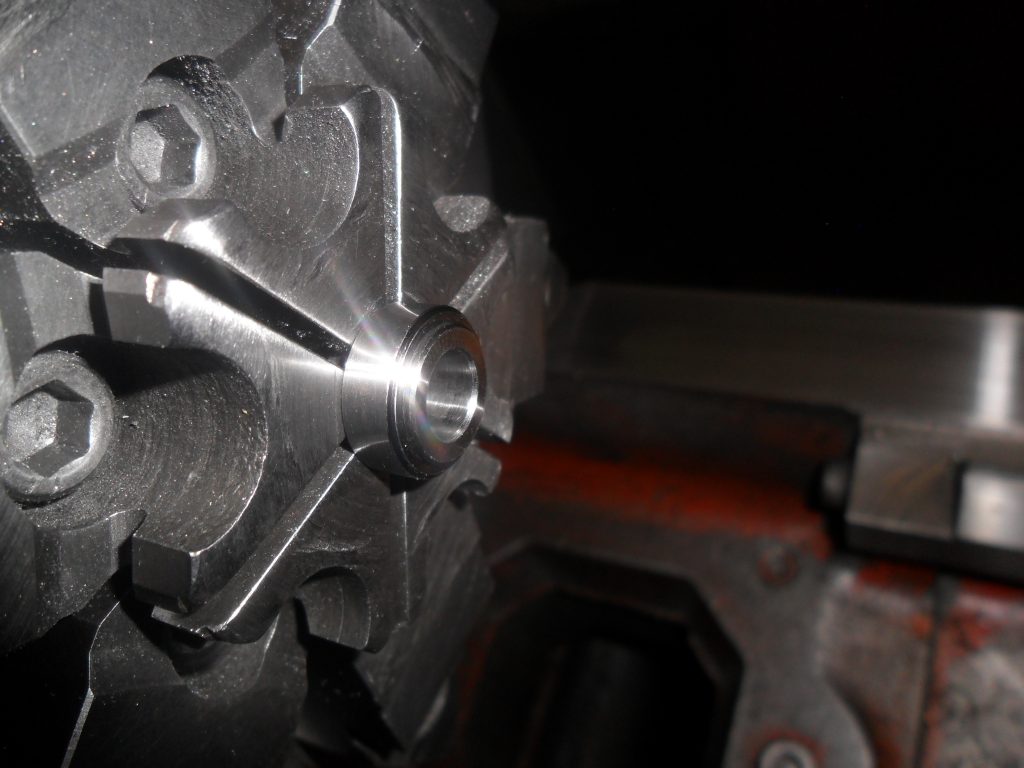
- Symmetrical Components: Pulleys, gears, and bushings.
- Custom Designs: Prototypes and bespoke parts tailored to specific requirements.
Benefits:
- Precision: Provides accurate and consistent results, ideal for parts with tight tolerances.
- Versatility: Can handle a wide range of materials and part geometries.
- Efficiency: Allows for high-speed production, especially with CNC lathes.
In Summary
Lathe machining is a fundamental and versatile process that excels in creating detailed and precise parts with rotational symmetry. Whether for single prototypes or large production runs, it remains a vital technique in modern manufacturing.